Digital Kanban & Material Flow Transformation
During my internship at Oxus America, I led the design and implementation of a facility-wide pull-based material replenishment system supporting compressor remanufacturing operations. The project focused on improving material flow, increasing inventory visibility, reducing non-value-added labor, and creating a scalable system that could support future growth.
Overview
The existing material replenishment process lacked visibility, standardization, and traceability. Operators spent significant time searching for inventory, transporting materials between production areas, and managing inventory with limited real-time information.
These inefficiencies created unnecessary labor, increased process variation, and limited the ability to maintain consistent material flow throughout disassembly, washing, and assembly operations.
The Challenge
I was responsible for analyzing existing material flow, identifying process inefficiencies, and designing a complete pull-based replenishment system.
My responsibilities included:
Material flow analysis
Supermarket inventory design
Digital Kanban development
Standardized work creation
Visual management implementation
Inventory traceability improvements
Cross-functional collaboration with operators, engineers, and leadership teams
My Role
To improve material flow and inventory control, I applied Lean Manufacturing principles including:
Pull systems
Kanban replenishment
FIFO inventory management
Visual management
Standardized work
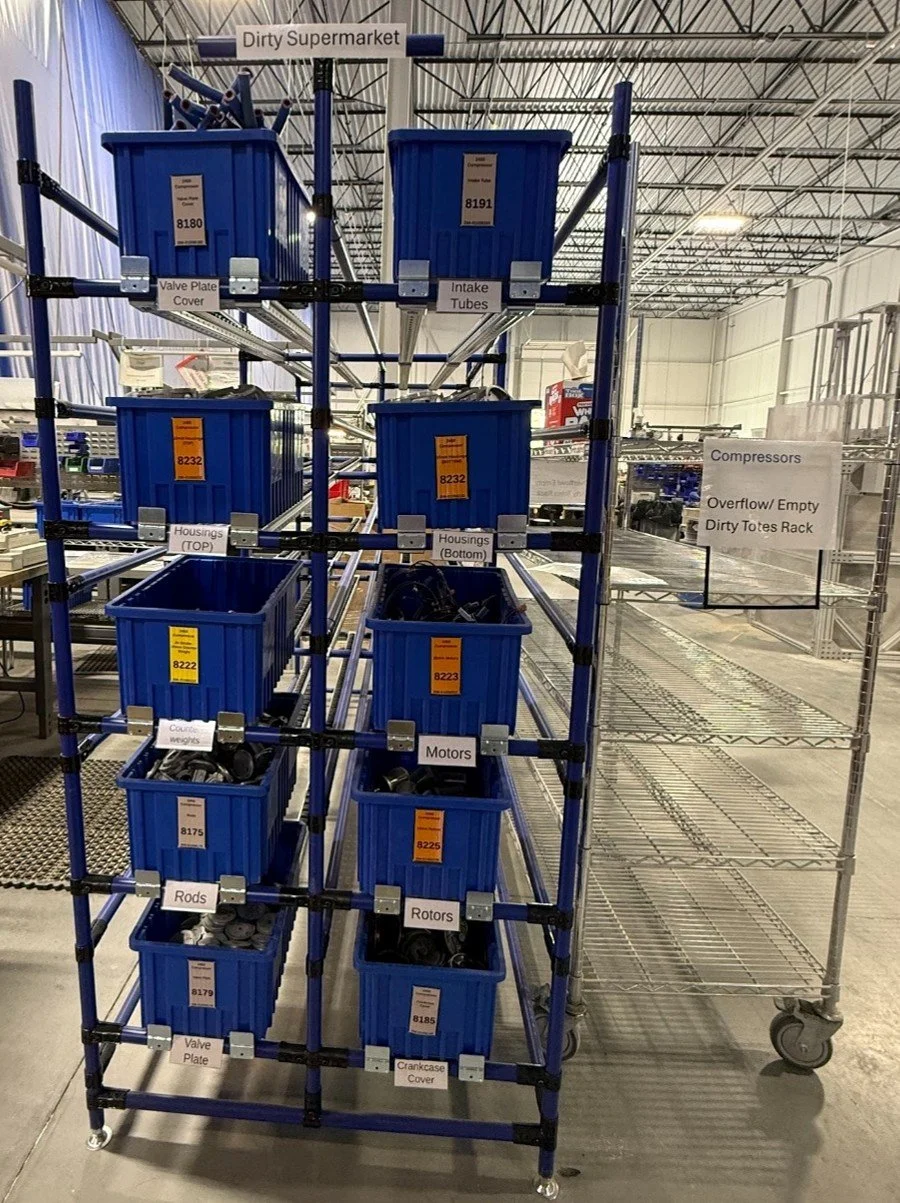
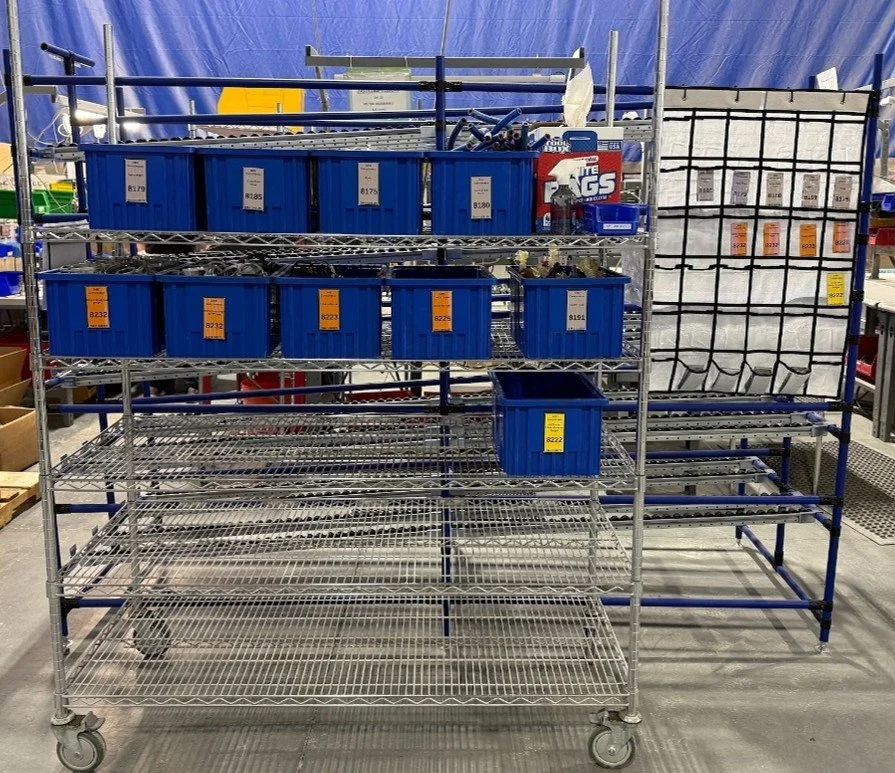
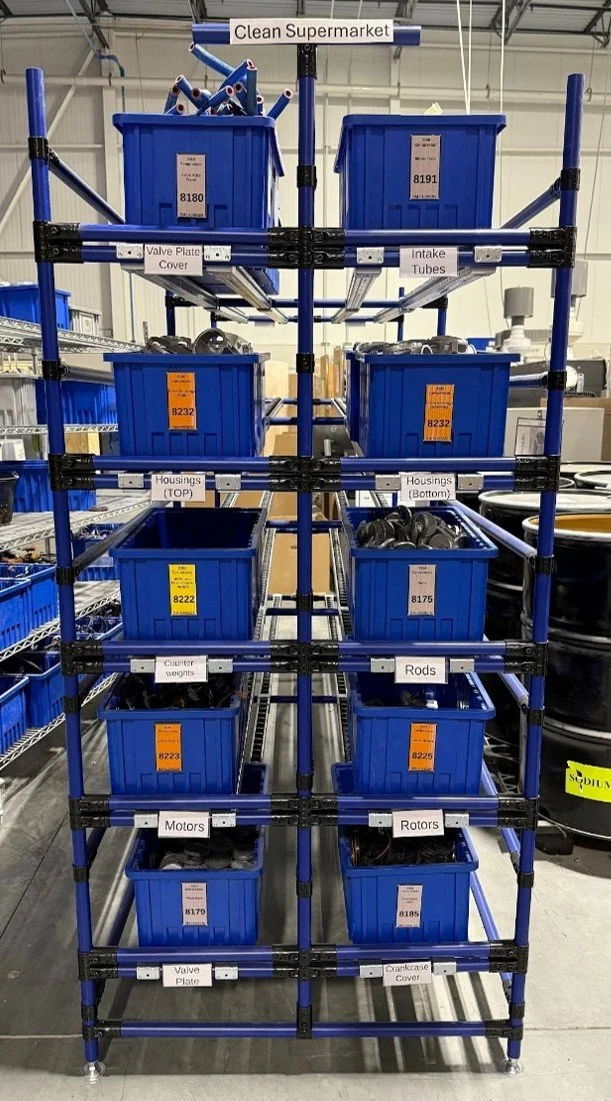
I developed separate dirty and clean supermarket inventory locations to improve inventory organization and support continuous flow through the remanufacturing process.
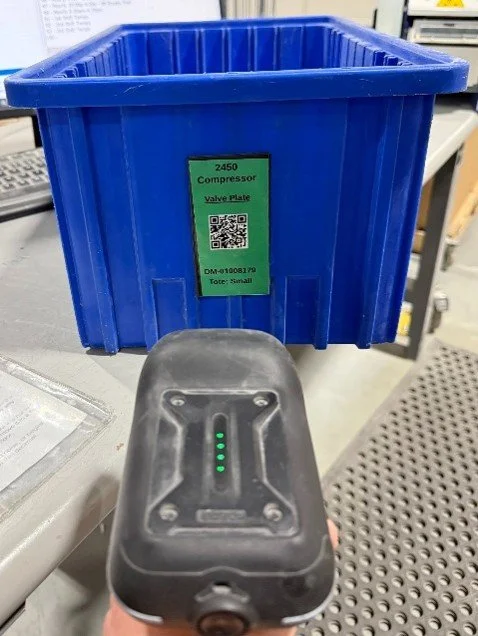
To improve replenishment accuracy and visibility, I also designed and deployed a QR-code-based digital Kanban system that enabled real-time inventory tracking and replenishment requests.
Engineering Approach
The project delivered measurable operational improvements:
Eliminated 2.4 hours of material handling per shift
Reduced operator travel to zero
Reduced washing labor requirements by 80%
Generated over $90,000 in annual labor savings
Established a standardized model capable of generating an estimated $1M+ annual savings opportunity through broader deployment
Improved inventory visibility, replenishment accuracy, and material traceability throughout production operations
Results