Workstation Redesign & Gravity Flow Integration
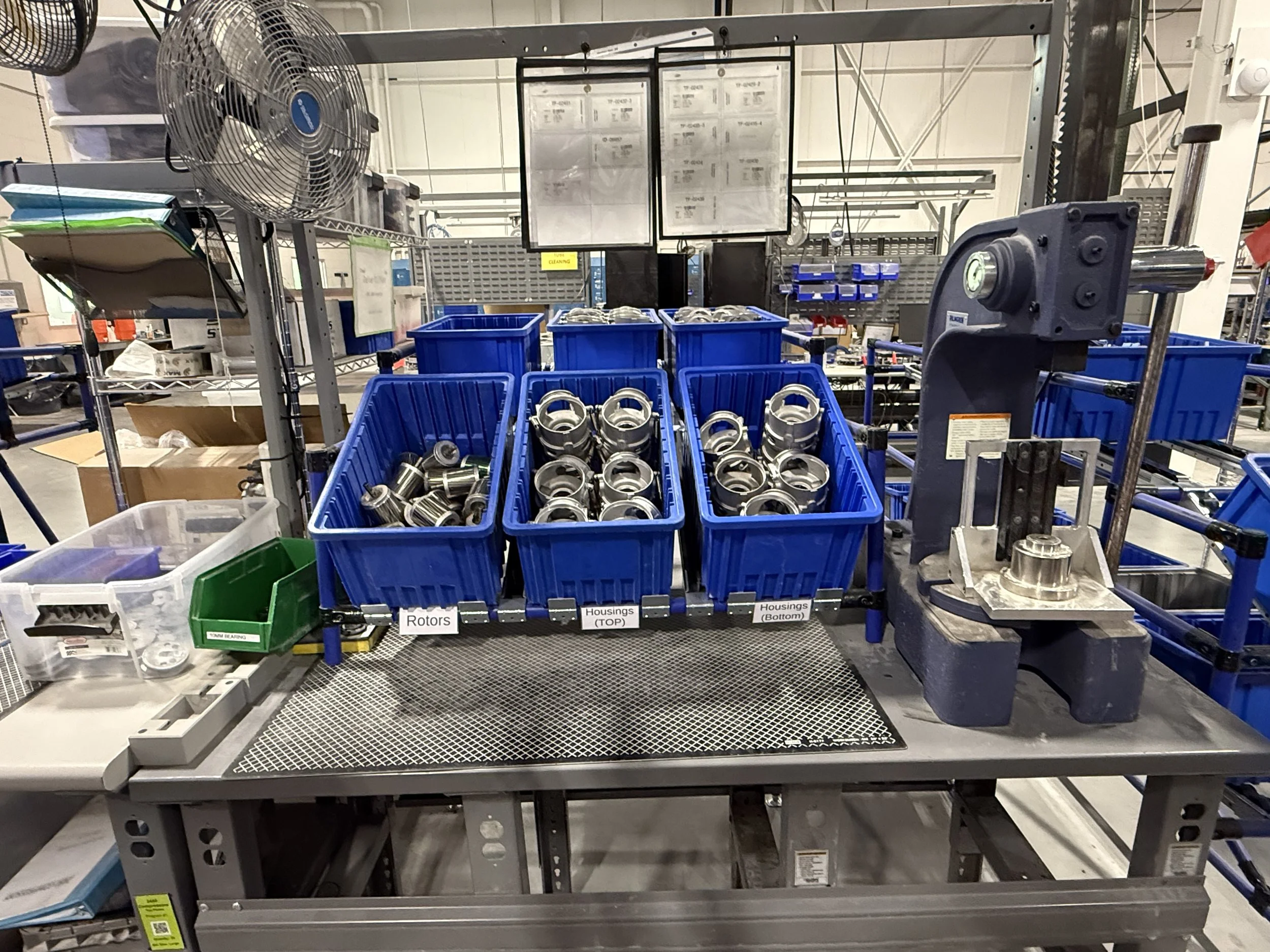
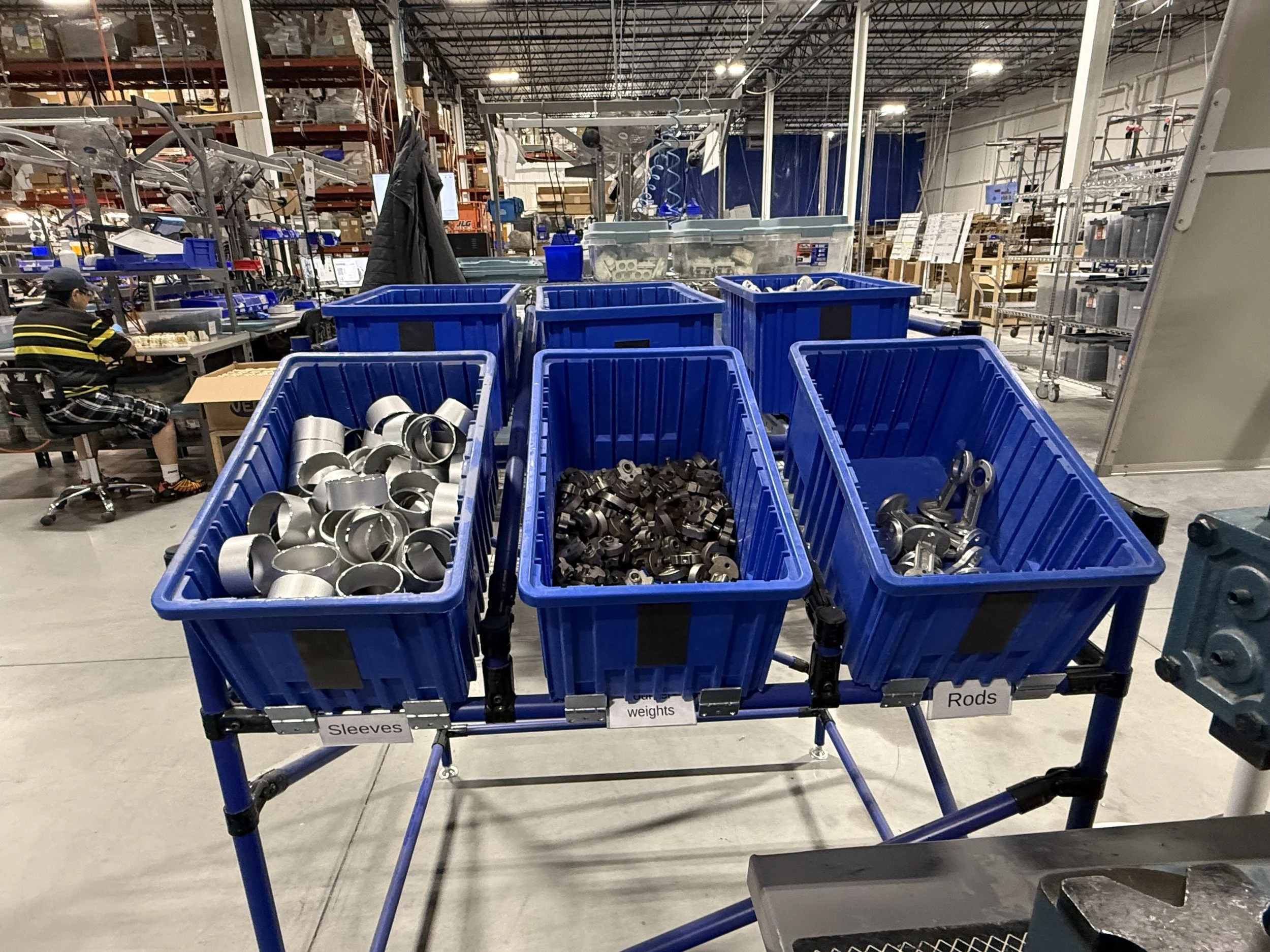
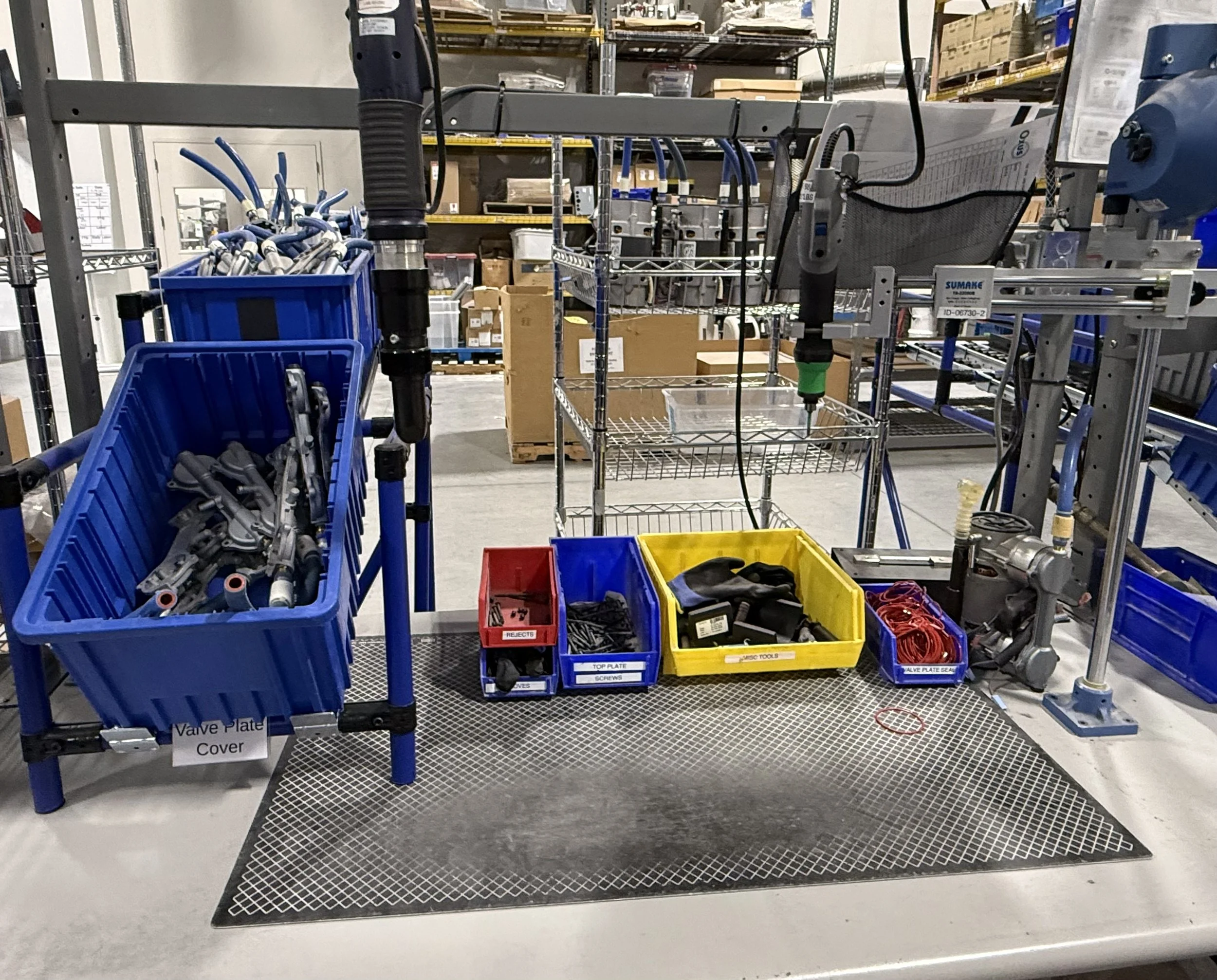
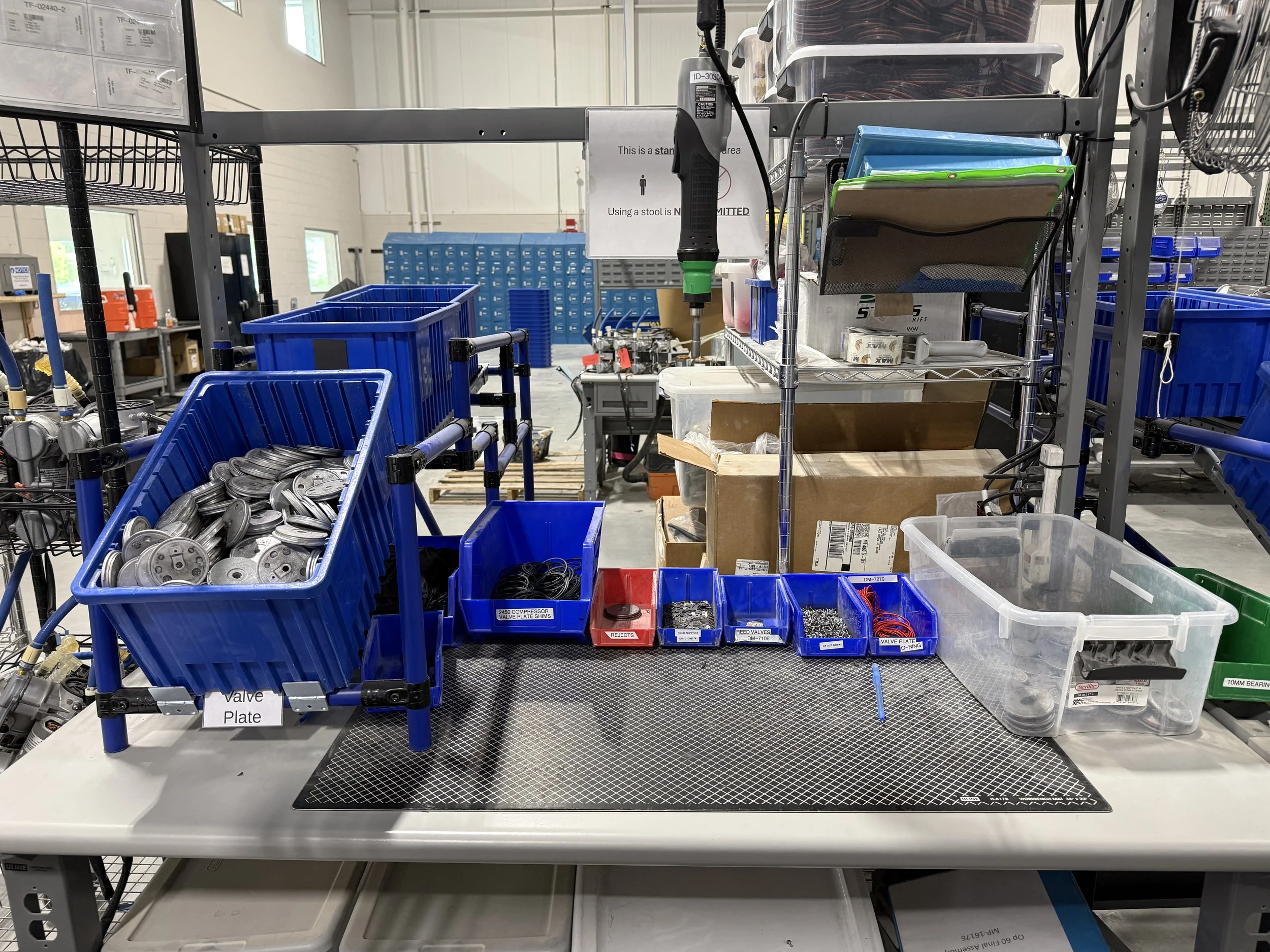
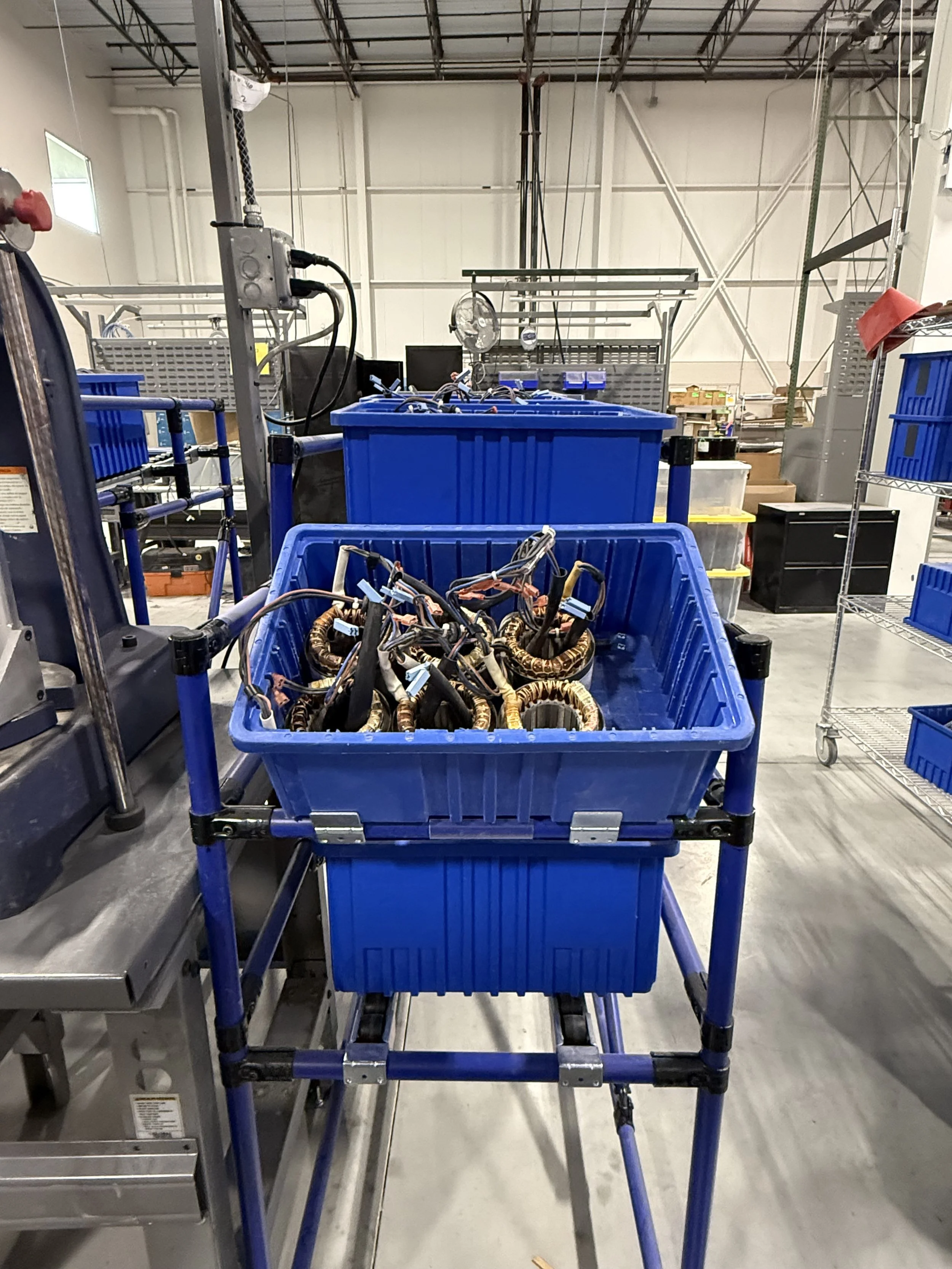
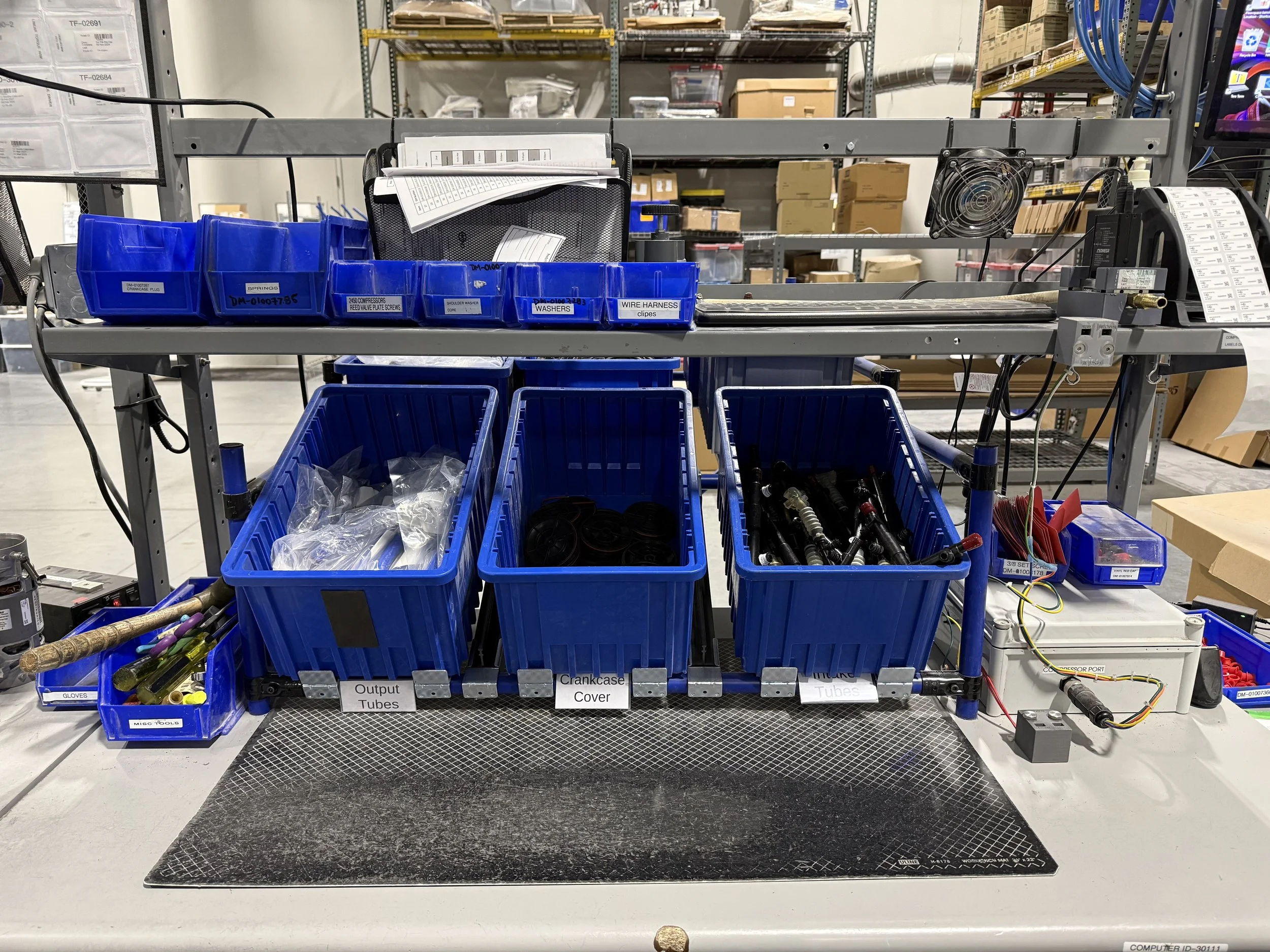
During my internship at Oxus America, I led a workstation redesign initiative focused on improving material presentation, reducing operator motion, and creating a more organized and efficient assembly environment. By applying Lean Manufacturing and 5S principles, I transformed the workstation layout and integrated gravity flow racks that delivered materials directly to operators while seamlessly connecting with the facility's digital Kanban replenishment system.
Overview
The existing workstation contained five large wire racks filled with miscellaneous parts, tools, and inventory. Material organization was inconsistent, visibility was limited, and operators frequently spent time searching for components needed during assembly.
In addition, operators were required to retrieve replacement material totes from staging racks located outside of the work cell. As inventory was consumed throughout the shift, operators repeatedly left their workstations to obtain replacement materials, disrupting workflow and creating unnecessary motion.
The process resulted in:
Excessive operator movement
Increased material handling
Workspace clutter
Reduced visibility of inventory levels
Inefficient material replenishment
The Challenge
I was responsible for evaluating the existing workstation layout, identifying sources of waste, and designing an improved material presentation system that would increase efficiency and support continuous flow.
My responsibilities included:
Applying 5S principles to workstation organization
Designing gravity flow rack configurations
Improving material presentation and accessibility
Integrating workstation replenishment with the digital Kanban system
Supporting implementation and operator adoption
My Role
I began by analyzing operator movement throughout the workday and evaluating how materials were being stored, replenished, and accessed during assembly operations.
Using Lean Manufacturing principles, I focused on eliminating unnecessary motion and improving point-of-use material delivery.
The redesign centered around three key objectives:
5S Workstation Organization:
Removed unnecessary inventory storage and organized materials to create a cleaner, more efficient, and more visually manageable work environment.
Point-of-Use Material Delivery:
Designed gravity flow racks that positioned inventory directly at the operator's workstation, allowing components to be accessed without leaving the assembly area.
Digital Replenishment Integration:
Integrated the workstation with the facility's QR-code Kanban system. Once a tote was consumed, the operator scanned the Kanban tag, automatically generating a replenishment request containing both the material and quantity required.
Engineering Approach
The workstation redesign produced several operational improvements:
Eliminated repeated operator trips outside the work cell
Reduced non-value-added motion during assembly operations
Improved material visibility and organization
Enhanced workstation cleanliness through 5S implementation
Improved ergonomics by reducing carrying and reaching
Increased replenishment responsiveness through Kanban integration
Created a more efficient and sustainable material flow process
Results