Rotary Valve Spring Pin Installation Tool Development
During my internship at Oxus America, I contributed to the redesign of a spring pin installation tool used in rotary valve assembly operations. The project focused on improving tool durability, simplifying the installation process, and eliminating recurring fixture failures that were disrupting production. The resulting design improved reliability while creating a more user-friendly solution for operators.
Overview
The existing spring pin installation tool was used to hold a spring pin in position while operators used a hammer to fully seat the pin during assembly.
Due to repeated impact loading, the fixture experienced frequent failures, requiring replacement approximately one to two times per week. These failures created unnecessary downtime and maintenance effort while impacting production efficiency.
The team needed a more durable and reliable solution that could withstand day-to-day production use.
The Challenge
I worked with the engineering team to evaluate the existing tool design, identify opportunities for improvement, and support development of a more robust installation fixture.
My contributions included:
Evaluating limitations of the existing fixture
Assisting in the redesign effort
Supporting fixture concept development
Contributing to design decisions focused on reliability and usability
Assisting with implementation and production validation
My Role
The primary goal was to eliminate the recurring failures caused by repeated hammer impacts while making the installation process easier for operators.
The redesign focused on:
Improved Durability:
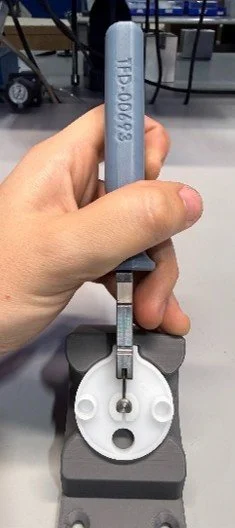
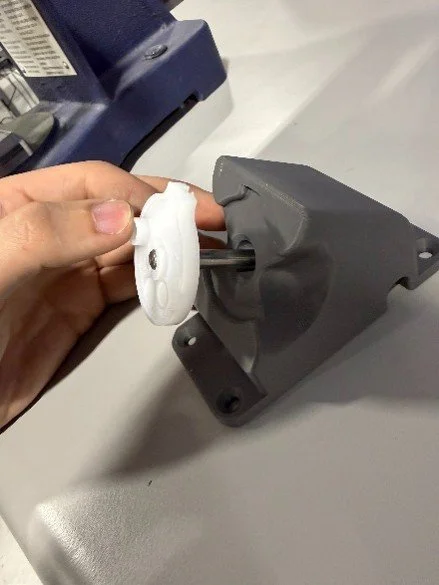
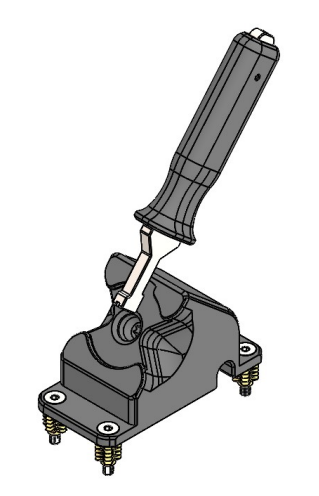
A steel core structure was incorporated into the design to provide significantly greater strength and resistance to wear.
Easier Operation:
The new design eliminated the need for hammer-based installation, reducing impact loads and simplifying the assembly process.
Improved Ergonomics:
A custom 3D-printed handle and locating nest were incorporated to improve handling, positioning, and overall ease of use.
Engineering Approach
The redesigned fixture delivered several significant improvements:
Eliminated the need for hammer-based installation
Improved operator ease of use
Increased fixture durability
Improved alignment and positioning during assembly
Reduced maintenance requirements
Eliminated recurring fixture failures
Since implementation, the redesigned tool has not experienced any failures, compared to the previous fixture which was failing approximately one to two times per week.
Results